FBA (Amazon warehouses + ships your stock) wins on Buy Box, Prime badge and scaling speed. FBM (you ship yourself) wins on margin for heavy, bulky or slow-moving products. Most profitable Amazon India sellers use a hybrid model. Read the full breakdown to know which SKUs belong where.
EcomSarthi Editorial Team··15 min read
Amazon FBA vs FBM India 2026 — Which Fulfilment Model is Right for You?
I get this question almost every week from new and experienced sellers alike. "Should I use FBA or FBM?" The honest answer is: it depends on your product weight, velocity, category and margin — and most serious sellers end up using both. This guide breaks it all down with real numbers so you can make the right call for every SKU.
1. What is Amazon FBA and How Does It Work in India?
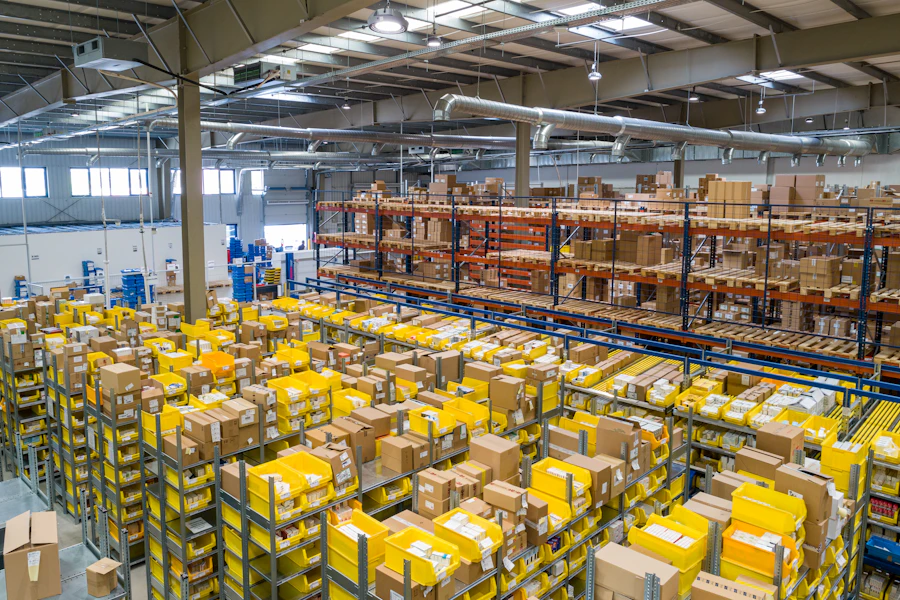
Fulfilled by Amazon (FBA) means you send your entire inventory to Amazon\'s Fulfilment Centres (FCs) in India — Pune, Delhi-NCR, Hyderabad, Mumbai, Bengaluru — and Amazon handles everything from that point: storage, picking, packing, shipping, customer service and returns.
From a seller\'s daily operations perspective, once your inventory is at the FC, you\'re mostly hands-off on fulfilment. Your job shifts to replenishment — monitoring stock levels and shipping new inventory to FCs before you run out.
The big win with FBA is the Prime badge. Prime-badged products get faster delivery promises (same-day or next-day in major cities), appear higher in search results for Prime-filtered queries, and win the Buy Box far more consistently. For most standard products, getting the Prime badge alone justifies the FBA fee premium.
How Amazon FBA India works — step by step
You send inventory to designated Amazon Fulfilment Centres (FCs)
Amazon stores your products in their warehouses
Customer orders your product on Amazon.in
Amazon picks, packs and ships the order within their SLA (same-day or next-day for Prime)
Customer gets the order; Amazon handles any returns or issues
Amazon settles your payment every 7 days minus their fees
2. What is Amazon FBM — and What About Easy Ship?
Fulfilled by Merchant (FBM) means you store inventory in your own warehouse, pick and pack orders yourself, and ship through your own courier — Delhivery, Blue Dart, XpressBees, or whoever gives you the best rates. Amazon just provides the marketplace; you handle everything else.
Amazon Easy Ship is the third option that often gets overlooked. You store and pack the product, but Amazon\'s own logistics picks it up from your location and delivers to the customer. it\'s cheaper than FBA (no storage fees) but you still get some benefits — integrated tracking, Amazon\'s delivery network. Easy Ship is available in 200+ cities and is often the right choice for medium-velocity products with higher weight.
Feature
FBA
Easy Ship
FBM (Self-Ship)
Who stores product?
Amazon FC
You
You
Who packs?
Amazon
You
You
Who ships?
Amazon
Amazon logistics
Your courier
Prime Badge?
✅ Always
Partial cities
❌ No
Storage fees?
Yes
No
No
Fulfilment fees?
Higher
Medium
None (only referral)
Return handling?
Amazon
Amazon
You
Best for?
Fast-moving, small/light
Medium velocity
Heavy/bulky/custom
3. Real Fee Breakdown — FBA vs FBM with Actual Indian Numbers
Let me show you how the fees actually play out with a real product example. Let's take a cotton t-shirt (300g, sold at ₹499).
FBA Fees — T-Shirt ₹499
Referral Fee (15%)₹74.85
Weight Handling (300g)₹32.00
Pick & Pack₹14.00
Monthly Storage (avg)₹8.00
Closing Fee₹5.00
Total Fees₹133.85
Net to Seller₹365.15
FBM Fees — T-Shirt ₹499
Referral Fee (15%)₹74.85
Your Shipping Cost₹45.00
Packaging Material₹8.00
Labour (packing)₹5.00
Closing Fee₹5.00
Total Fees₹137.85
Net to Seller₹361.15
For a 300g t-shirt at ₹499, FBA and FBM are almost identical in total cost. But with FBA you get Prime badge, no operations headache, and much better Buy Box win rate — making FBA the clear winner here.
Now let's check a heavy item (5kg electric kettle, ₹1,299):
FBA Fees — Kettle ₹1,299 (5 kg)
Referral Fee (8%)₹103.92
Weight Handling (5kg)₹168.00
Pick & Pack₹23.00
Monthly Storage (large)₹22.00
Closing Fee₹10.00
Total Fees₹326.92
Net to Seller₹972.08
FBM Fees — Kettle ₹1,299 (5 kg)
Referral Fee (8%)₹103.92
Your Shipping (5kg)₹95.00
Packaging₹25.00
Labour₹10.00
Closing Fee₹10.00
Total Fees₹243.92
Net to Seller₹1,055.08
For the heavy kettle, FBM saves you ₹83 per order. At 100 orders/month that\'s ₹8,300 extra profit. This is where FBM (or Easy Ship) clearly wins.
4. The Buy Box & Prime Badge — FBA's Hidden Superpower
This is where FBA's real value is often underestimated. The Buy Box is the "Add to Cart" button on every Amazon listing. 82% of Amazon India sales happen through the Buy Box. If you\'re not winning it, you\'re essentially invisible.
Amazon\'s Buy Box algorithm heavily favours FBA sellers for one simple reason: Amazon controls the fulfilment, so delivery speed and reliability are guaranteed. FBM sellers need a near-perfect performance record (Late Dispatch Rate below 4%, Cancellation Rate below 2.5%, Order Defect Rate below 1%) to compete with FBA for the Buy Box.
Prime badge matters especially on mobile — where 75%+ of Amazon India shopping happens. Prime filters are used heavily. If your product doesn't have Prime, a significant portion of buyers will never even see it.
⚡ Real-World Impact
One of our clients selling phone cases switched from FBM to FBA for their top 20 SKUs. Buy Box win rate went from 34% to 87% within 2 weeks. Revenue from those SKUs increased 2.4× — despite paying ₹18–25 more per order in FBA fees. The volume increase more than compensated.
75%+ of Amazon India shopping happens on mobile. Prime badge is the first filter many buyers apply.
5. When Should You Choose FBA?
FBA is the right choice when the Prime badge and Buy Box advantage generate more revenue than the extra fees cost you. Use this checklist:
✅
Product weight under 3 kg
FBA weight handling fee stays reasonable. Above 5kg, the fee spike usually makes FBM more cost-effective.
✅
Product dimensions: standard size (under 45×35×35 cm)
Oversized FBA fees are significantly higher. Standard-size products get the best FBA fee rates.
✅
Velocity: 30+ units per month per ASIN
FBA storage fees are per cubic foot per day. Slow-moving stock accumulates fees. High-velocity products minimise storage cost per unit.
✅
Category where Prime drives Buy Box (electronics, health, baby, beauty)
In these categories, buyers strongly filter for Prime. Not being FBA is a serious disadvantage.
✅
You want to scale without hiring operations staff
FBA lets you grow from 100 to 1,000 orders/day without adding warehouse headcount.
✅
Products with consistent year-round demand
Seasonal products risk long-term storage fees if not sold within 180 days.
6. When Should You Choose FBM (or Easy Ship)?
FBM/Easy Ship is the better choice when FBA fees eat too much of your margin or your product type doesn't benefit from Prime. These are the signals:
🔴
Products over 5 kg
FBA weight handling fees for heavy products can exceed your reasonable shipping cost by 50–80%. FBM or Easy Ship almost always wins.
🔴
Oversized products (furniture, large appliances, industrial goods)
Oversized FBA fees plus long-term storage make these uneconomical. FBM is the only practical choice.
🔴
Slow-moving or seasonal products
If a product moves fewer than 15 units/month, storage fees accumulate fast. Use FBM and avoid FC inventory completely.
🔴
Custom, made-to-order or perishable products
You can't pre-stock custom orders in an FC. Perishables have short shelf life. FBM is the only option.
🔴
Products requiring special handling or assembly
FBM gives you control over how the product is packed, assembled and presented.
🔴
You already have a strong 3PL setup with fast dispatch
If your existing logistics gives you 99%+ on-time dispatch, you can compete for Buy Box as FBM with near-FBA metrics.
7. The Hybrid Strategy — How Top Amazon India Sellers Do It
Every serious Amazon India seller I've worked with eventually settles on a hybrid model. The logic is simple: use FBA where it wins the economics, use FBM/Easy Ship where it doesn't. The split is typically done by SKU category:
FBA
Fast-moving SKUs (top 30-40% of catalog by revenue)
Standard-size, under 3kg, 50+ units/month, categories where Prime badge drives conversion
Easy Ship
Medium-velocity SKUs (middle 30-40%)
3–7kg products, moderate velocity, categories where Prime is less critical
FBM Self-Ship
Slow-moving or heavy SKUs (bottom 20-30%)
Heavy products, seasonal items, custom goods, products with unpredictable velocity
Review your SKU list every quarter. Products that were slow-moving may become fast-moving after marketing push — move them to FBA. Products going seasonal should shift to FBM before the slow period to avoid storage fees.
8. Category-by-Category FBA vs FBM Recommendation
Category
Recommended
Reason
Health & Beauty
FBA
Prime badge critical. Buyers filter for Prime heavily in health/beauty.
Electronics (mobile, tablets)
FBA
Trust factor + fast delivery is crucial. High competition makes Prime essential.
Small Appliances (under 3kg)
FBA
Standard size, high velocity — FBA economics work perfectly.
Large Appliances (5kg+)
FBM/Easy Ship
Weight fees make FBA uneconomical. Use Easy Ship for logistics reliability.
Books & Stationery
FBA
Light, standard size, Prime badge lifts conversion significantly.
Clothing & Fashion
FBA (top SKUs)
Prime badge wins Buy Box. But model returns carefully — fashion has 15-25% return rates.
Ethnic Wear (heavy)
Easy Ship
Heavier pieces with moderate velocity — Easy Ship balances cost and delivery reliability.
Furniture & Home Décor (large)
FBM
Oversized — FBA not practical. Negotiate bulk courier rates.
FMCG / Grocery
FBA
High velocity, standard size — FBA shines here.
Toys & Games (standard size)
FBA
Seasonal peaks make Prime badge critical (Diwali, Christmas).
Industrial / B2B products
FBM
Often custom or heavyweight. B2B buyers care less about Prime.
Handmade / Artisan
FBM
Made to order, unique items — FBM is the only option.
9. 7 FBA Mistakes Indian Sellers Make (and How to Avoid Them)
1
Sending ALL inventory to FBA
Many new sellers move their entire catalog to FBA without analysing which SKUs actually benefit. The heavy, slow-moving ones rack up storage fees and eat margin.
✅ Fix: Do a per-SKU fee analysis before enrolling. Only FBA products that clearly benefit.
2
Ignoring long-term storage fees
Amazon charges extra for products stored more than 180 days. Slow-moving FBA inventory can cost more in storage than it earns in profit.
✅ Fix: Use Amazon's Inventory Age report weekly. Liquidate or remove stock approaching the 180-day mark.
3
Under-labelling / wrong FNSKU labels
Sending inventory without proper FNSKU barcodes or with wrong labels causes FC rejections, delays and reconciliation headaches.
✅ Fix: Always generate and apply FNSKU labels before shipping. Use EcomSarthi's free FNSKU generator.
4
Not accounting for FBA returns
Amazon sometimes returns damaged or lost inventory. Many sellers don't file for reconciliation claims and lose money they're owed.
✅ Fix: Run the FBA Inventory Reconciliation report monthly and file claims for any discrepancies.
5
No Min/Max replenishment system
Running out of FBA stock means zero Buy Box, lost ranking and recovery time when you restock.
✅ Fix: Set Amazon Restock Alerts and maintain a buffer of 30–45 days of stock in FCs at all times.
6
Sending the wrong ASINs first
Sending slow-moving inventory to FBA to "test it" ties up capital in storage fees while the stock barely moves.
✅ Fix: FBA your proven bestsellers first. Build a track record, then expand to adjacent SKUs.
7
Not using the Fee Calculator before enrolling
Guessing FBA fees is a recipe for surprise losses. The actual fee depends on exact dimensions and weight — even 1cm can push you into a higher fee bracket.
✅ Fix: Use Amazon's Revenue Calculator for every ASIN. Our profit calculator also models this.
Confused about FBA vs FBM for your specific products?
EcomSarthi does a per-SKU FBA feasibility audit — we tell you exactly which products should be FBA, Easy Ship or FBM with the actual fee numbers. Free, no commitment required.
Yes — for fast-moving, standard-size products under 3 kg, FBA is profitable because the Prime badge wins the Buy Box more consistently. Margins shrink for heavy or slow-moving products due to storage and fulfilment fees. Always run the numbers per ASIN before enrolling.
What are Amazon FBA fees in India 2026?
FBA fees in India 2026 include: Weight Handling (₹27–₹96+ per shipment depending on weight tier), Pick & Pack (₹14–₹23), Monthly Storage (₹0.69–₹1.89 per cubic foot per day), plus the standard referral fee (5–30% by category). Use Amazon's Revenue Calculator for exact product-level estimates.
Can I use both FBA and FBM on Amazon India?
Yes. The hybrid model is what most serious Amazon India sellers use — FBA for fast-moving standard-size SKUs and FBM/Easy Ship for heavy, slow-moving or made-to-order products. Amazon allows you to choose fulfilment method per ASIN.
What is Amazon Easy Ship?
Amazon Easy Ship is a middle-ground option. You store and pack the product; Amazon's logistics partner picks it up from your location and delivers to the customer. No storage fees, lower fulfilment cost than FBA, and partial Prime eligibility in covered cities. Best for medium-weight, medium-velocity products.
Which fulfilment is best for fashion sellers on Amazon India?
Fashion sellers typically use FBA for standard apparel to get Prime badge and higher Buy Box rates. However, fashion has 15–25% return rates — so calculate FBA fee impact carefully including return processing fees. Heavy/premium ethnic wear often works better on Easy Ship.
How long does it take for FBA inventory to go live?
After Amazon receives your shipment at the Fulfilment Centre, processing typically takes 2–5 business days (longer during peak season). Plan your inventory shipments 2 weeks ahead of any promotional period.
Is Amazon FBA profitable for Indian sellers in 2026? +
Yes — for fast-moving standard-size products under 3 kg priced above Rs.400, FBA is clearly profitable. The Prime badge increases conversion by 20-35% and Buy Box win rate significantly. Products moving 20+ units/month see higher total monthly profit on FBA even when per-unit margin is similar to FBM, because FBA generates more orders. Use our free profit calculator to model your specific SKU before switching.
What are the exact Amazon FBA fees in India 2026? +
FBA fees in 2026: Weight Handling Rs.27 (0-500g) to Rs.96 (2-5kg); Pick and Pack Rs.14 standard / Rs.23 oversized; Storage Rs.0.69-1.89 per cubic foot per day; Long-term storage Rs.900 per cubic metre per month after 180 days; Return processing equals weight handling fee per return. Plus the standard referral fee (5-30% by category) which applies to all fulfilment methods.
Can I use both FBA and FBM at the same time on Amazon India? +
Yes — Amazon allows any mix of fulfilment models in one seller account. Most successful Indian sellers run a hybrid: FBA for top 20% fast-moving SKUs, Easy Ship for mid-velocity products, FBM for heavy or custom items. You can even have the same ASIN listed under both FBA and FBM simultaneously for multi-channel fulfilment.
What is Amazon Easy Ship and how does it differ from FBA? +
Easy Ship is a courier-pickup model — you store products at your own location, pack each order yourself, and Amazon logistics partner comes to your address to pick up packed orders. Unlike FBA, you maintain full inventory control with no storage fees. Easy Ship qualifies for Prime eligibility (Easy Ship Premium) in metro cities. FBA has Amazon storing and packing everything in their fulfilment centres.
Which fulfilment model wins the Buy Box on Amazon India? +
FBA wins the Buy Box most consistently — 85-95% win rate for FBA vs 50-70% for FBM with good metrics. Amazon weights FBA heavily because it guarantees delivery reliability. Easy Ship falls in between at 70-80%. For private label sellers who are the sole ASIN owner, Buy Box competition is less relevant — the focus shifts to conversion rate improvement via Prime badge.
How do I switch from FBM to FBA on Amazon India? +
In Seller Central: Inventory > Manage Inventory > select SKU > Convert to Fulfilled by Amazon > Create FBA Shipment. Label products with FNSKU barcodes (use our free FNSKU generator), pack per Amazon requirements, arrange courier to the assigned FC. Allow 3-10 business days for check-in. Your listing automatically shows Prime badge once inventory goes live.
What is the minimum inventory to send for FBA in India? +
No formal minimum exists, but 50+ units per SKU is optimal for cost-efficiency. Sending fewer than 20 units makes inbound shipping cost per unit too high. For testing a new SKU on FBA, send 30-50 units as a pilot batch. If they sell through in 30-45 days, the SKU is a strong FBA candidate. Replenish before hitting 30-day stock cover to avoid stockout ranking penalty.
How long does FBA check-in take at Amazon India fulfilment centres? +
Standard FBA check-in takes 3-10 business days after physical receipt at the FC. During peak seasons (September-November pre-Diwali, Great Indian Festival prep) this extends to 14-21 days. Plan inventory replenishment 4-6 weeks ahead for sale events. During check-in, your inventory shows as "in transit" and is not available for purchase yet.
Is FBA better for fashion sellers on Amazon India? +
Depends on return rate. Standard apparel (basic kurtas, shirts, basics) with return rates below 15% works well on FBA — Prime badge gives significant conversion lift. However, fashion with 20-25% return rates should use Easy Ship because return processing fees (equal to weight handling fee per return) accumulate quickly. Calculate: if you sell 100 units/month at 20% returns, that is 20 return processing fees monthly. Model this before switching fashion SKUs to FBA.
What happens to FBA inventory if it does not sell? +
Slow-moving FBA inventory accumulates storage fees daily. After 180 days, Amazon charges long-term storage fees (Rs.900 per cubic metre per month) on top of regular storage. Monitor the FBA Inventory Health report monthly. Create removal orders for any SKU approaching 180 days. Amazon can also return or liquidate the inventory — removal fee is Rs.20-90 per unit depending on size. Never let inventory sit past 180 days without action.
Can FBM sellers win the Buy Box against FBA sellers in India? +
Yes, but it requires consistent excellent metrics: Order Defect Rate below 0.5%, Late Shipment Rate below 1%, Valid Tracking Rate above 98%, and competitive pricing within 2-3% of FBA price. Sellers with mature 3PL operations and dedicated courier partnerships regularly achieve 60-70% Buy Box win rate as FBM — not as high as FBA but commercially viable, especially for private label brands with exclusive listings.
How does FBA affect Amazon search ranking? +
FBA indirectly boosts search ranking by improving three A9 algorithm factors: higher conversion rate from Prime badge (buyers trust Prime), better click-through rate (Prime badge visible in search results), and superior seller performance metrics. Additionally, Prime filter searches only show FBA and Easy Ship Premium listings — meaning your product appears in a larger share of relevant searches when buyers filter for Prime delivery.
What is FNSKU and how do I get Amazon FBA labels? +
FNSKU (Fulfilment Network Stock Keeping Unit) is Amazon unique barcode for your product in their FC. Every FBA unit needs an FNSKU sticker on its outer packaging — this is different from the manufacturer barcode. Generate free FNSKU barcodes using EcomSarthi FNSKU Generator or from Seller Central under Manage FBA Inventory > Print Labels. Print on sticky labels (A4 sheet with 24 labels per page works well).
Does FBA guarantee Prime delivery to all Indian pin codes? +
FBA provides Prime delivery (next-day or 2-day) to 200+ major cities. For remote pin codes, FBA still delivers but in 3-5 days — Amazon shows accurate estimates per pin code on listing pages. Even for remote pin codes, FBA delivery is faster and more reliable than most FBM courier arrangements. Amazon distributes FBA inventory across multiple FCs nationally, minimising last-mile distance for most buyer locations.
Should I use FBA for Great Indian Festival and Diwali sales? +
Yes — FBA is essential for Great Indian Festival performance. Amazon often restricts FBM seller visibility during peak sale events, prioritising FBA listings for Prime Day, Great Indian Festival, and Diwali sale pages. Send FBA stock 6-8 weeks before the sale window (August-September for October sales). Amazon imposes FC receiving cutoffs before sale events — shipments received after the cutoff may miss the sale entirely. Plan your inventory calendar precisely.
EcomSarthi manages Amazon seller accounts across all major Indian cities. Our team handles listings, PPC, account health, FBA operations and weekly reporting. Click your city for a free audit:
Start selling on Myntra with complete onboarding support. Our experts help you with seller registration, document verification, catalog setup, and account activation to get your business live quickly
 EcomSarthi Editorial Team·
·15 min read
EcomSarthi Editorial Team·
·15 min read